
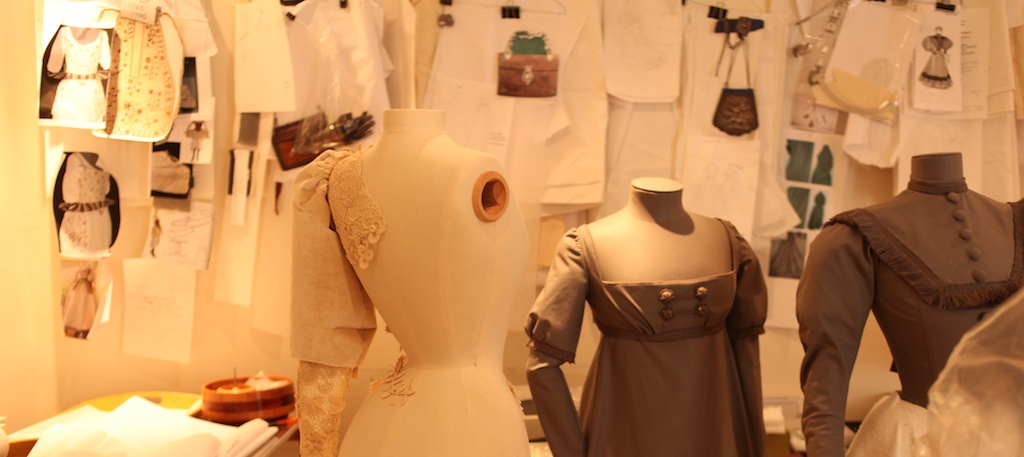
The studio's research into historical costume encompasses the academic study of dress history, the material analysis of surviving garments, and the practical investigation of period construction techniques. This work spans several centuries of European dress, with a particular emphasis on the seventeenth and eighteenth centuries — a period of extraordinary richness in textile production, tailoring innovation and decorative embellishment. By examining original garments in museum collections alongside documentary sources, the studio builds a detailed understanding of how clothes were made, worn and understood in their historical context.
A central strand of this research involves the close study of construction methods: the cut, assembly and finishing of historical garments. Through careful examination of seam structures, fabric grain, interlining materials and stitching techniques, the studio has developed expertise that informs both conservation work and the creation of faithful reproductions. This hands-on, object-based approach to dress history complements and extends the findings of archival and pictorial research, offering insights that can only be gained through direct engagement with the material evidence.
This research has been carried out in connection with projects for major cultural institutions, including the reconstruction of eighteenth-century court dress and the conservation of rare surviving garments. Findings from this work have contributed to academic publications, exhibition catalogues and public programmes, helping to bring the history of dress to wider audiences and to advance scholarly understanding of material culture and craftsmanship.